
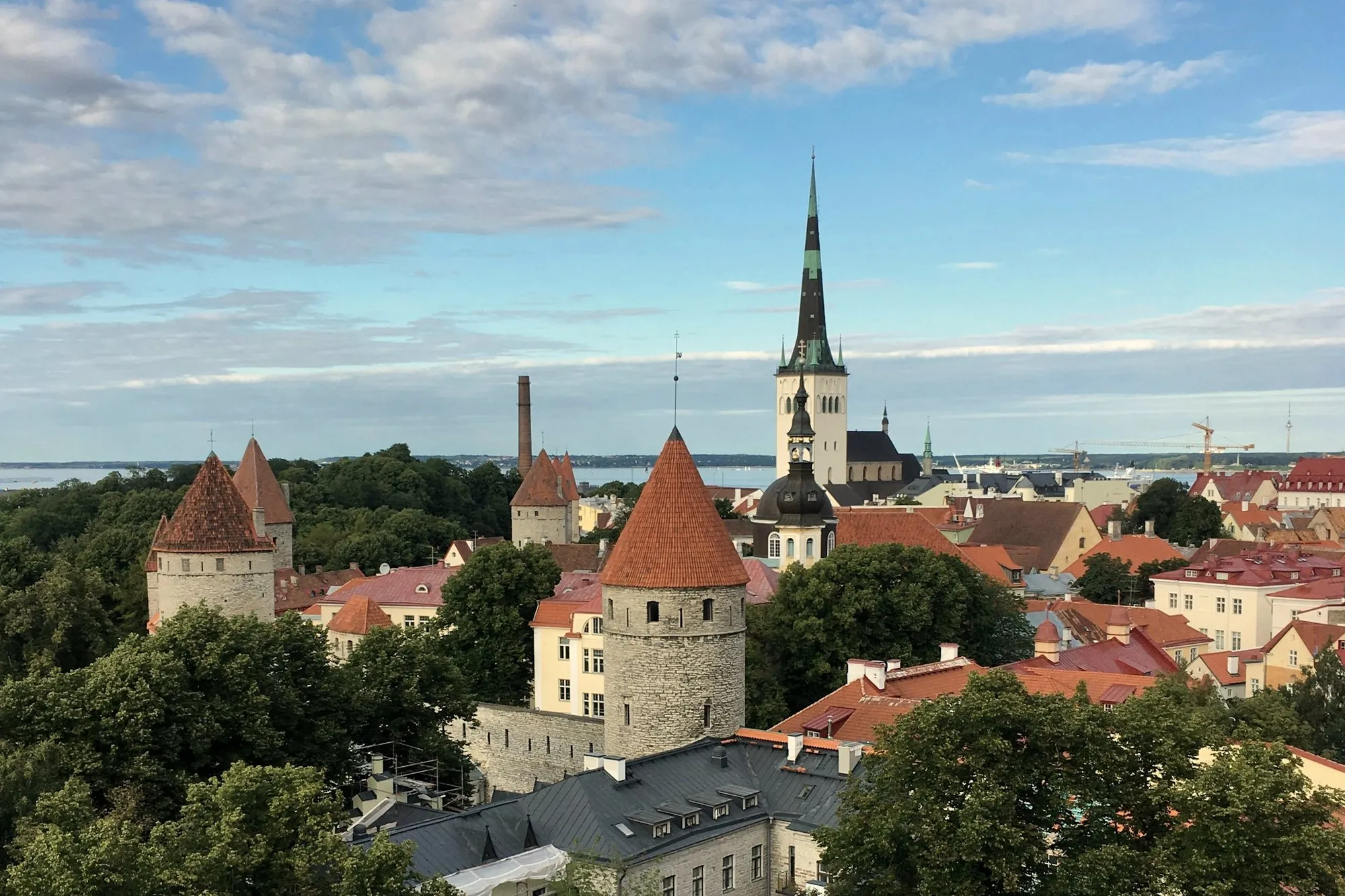
Tallinn's Old Town is one of the best-preserved medieval cities in Europe, a UNESCO World Heritage Site whose walls, streets and merchant houses have stood for close to eight hundred years.

Tallinn Old Town today
I

A Hanseatic harbour town

Tallinn grew up in the 13th century as a trading town on the Baltic, then known as Reval. In 1248 the Danish king granted it Lübeck Rights, which placed it in the same legal world as the German merchant towns and opened the door to the Hanseatic League.

The League made the town rich. A staple right won in 1346 meant goods moving between Novgorod and the West had to pass through local merchants, and that trade paid for the gabled houses, guild halls and churches that still shape the skyline. St Olaf's Church was for a time the tallest building in the world, its spire a marker for ships well out at sea.

From the start the town had two halves. Toompea, the upper town on the limestone hill, belonged to the bishops and the nobility. The lower town below it belonged to merchants and craftsmen. The two were not joined under one administration until the 19th century. The wall and towers that once enclosed them are among the best preserved in Northern Europe.
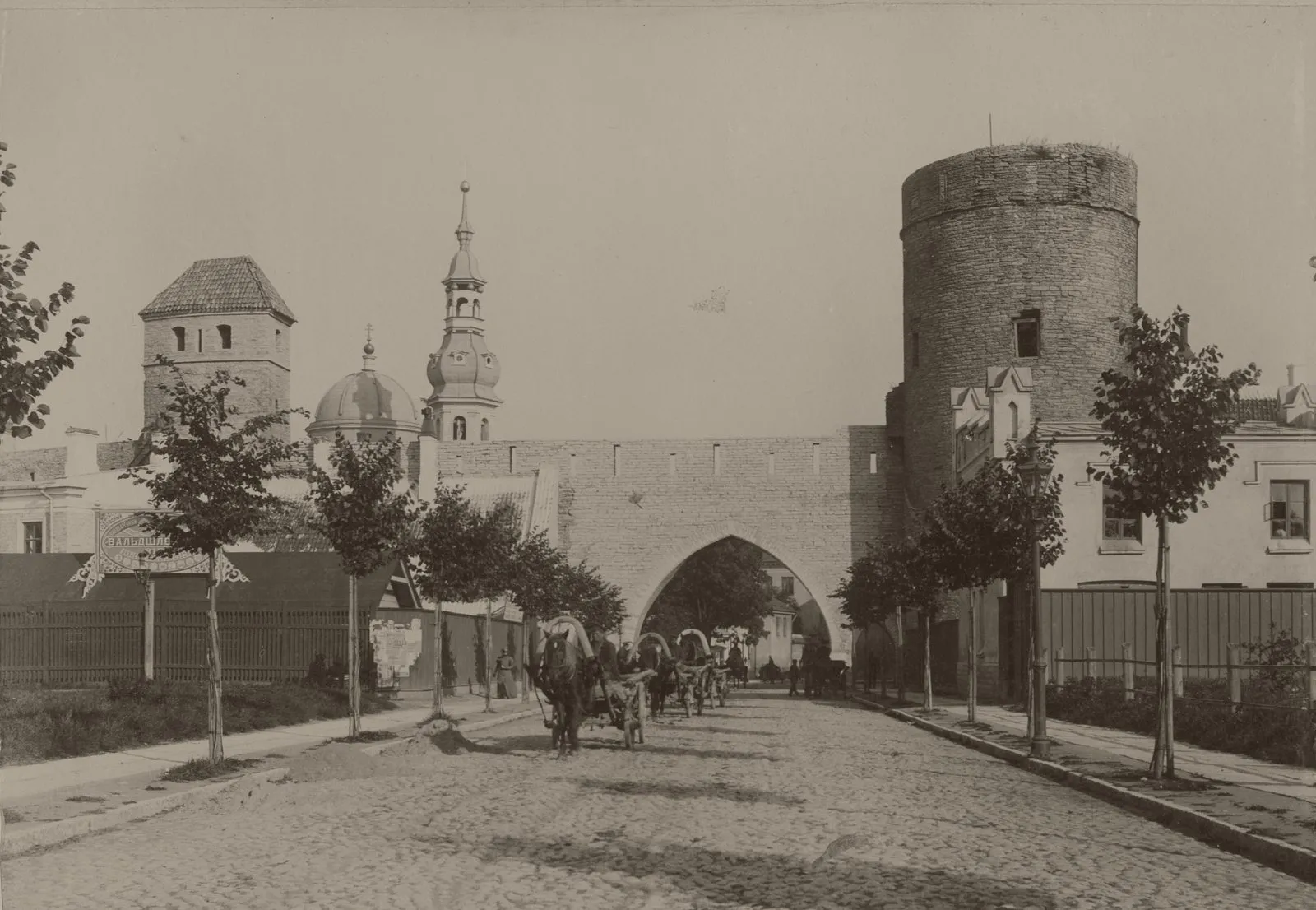
Tallinn Old Town, historical photograph: A Hanseatic harbour town
Vene turg · Eesti Ajaloomuuseum
II

Guilds and the order of the town

Trade ran on guilds, and the guilds set the order of daily life. The Great Guild held the established merchants, the men who sat on the council and ran the town's affairs. Below them stood the craft guilds, each trade with its own rules, its own standards and its own place.

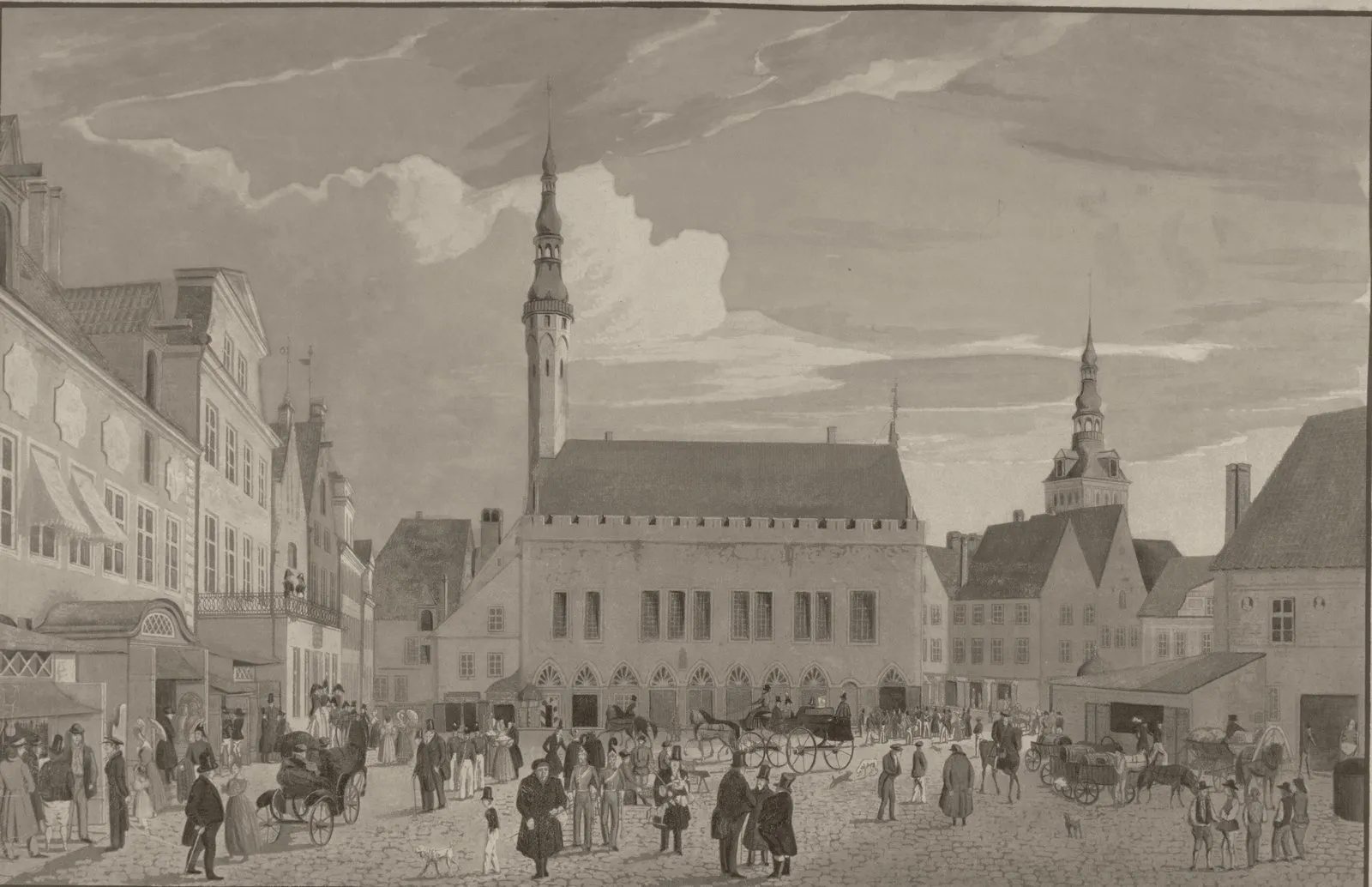
The young and unmarried merchants, many of them foreigners, had their own brotherhood: the Blackheads, named for their patron Saint Maurice. They traded, feasted and, when the town was threatened, took up arms as part of its defence. One of their customs has outlived the medieval town itself. The Blackheads are credited with raising one of the first public Christmas trees on Town Hall Square, a tradition the square still keeps every winter.

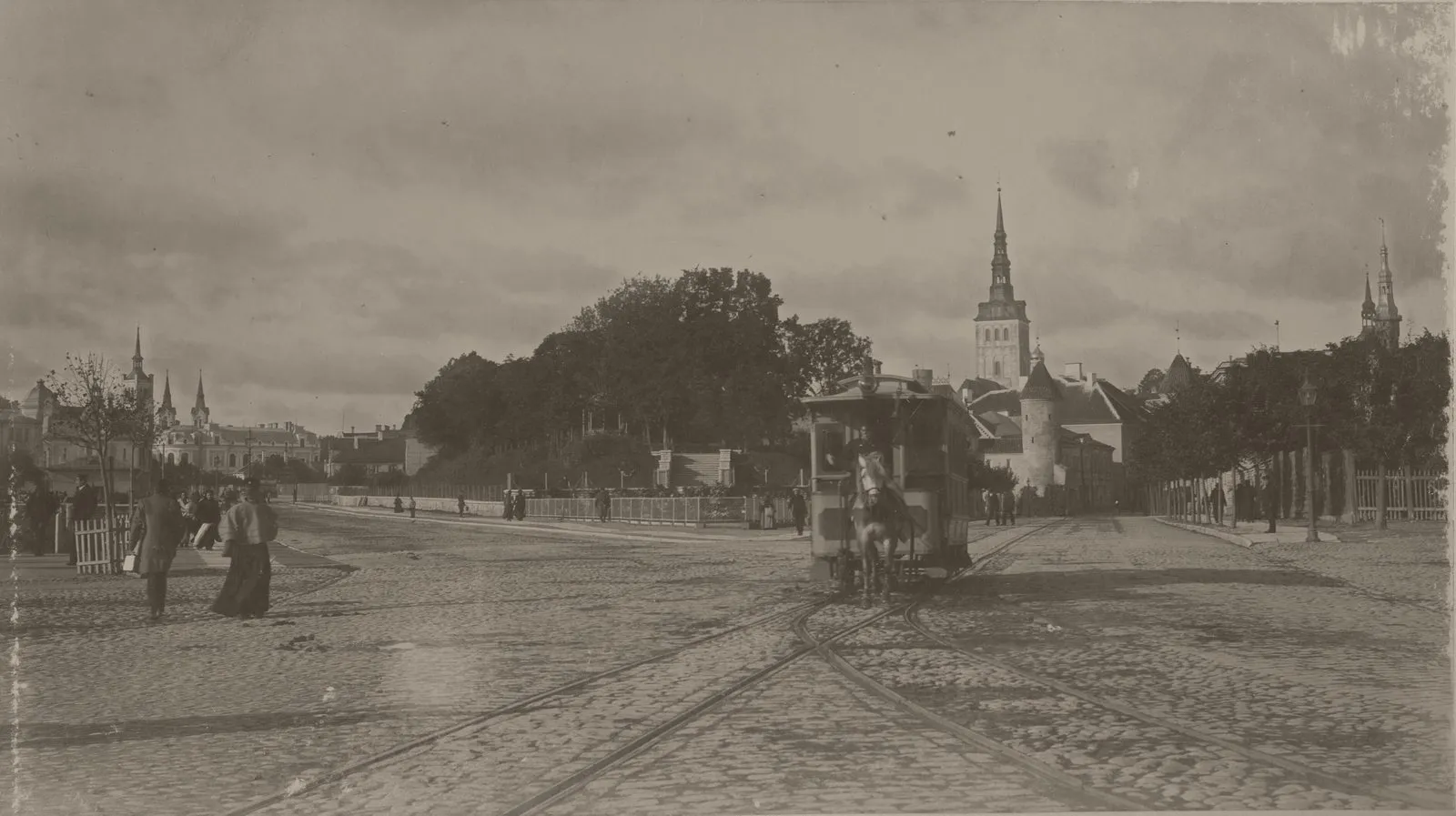
Tallinn Old Town, historical photograph: Guilds and the order of the town
Suur turg · Eesti Ajaloomuuseum
III

Stone, lime and timber

The Old Town was built from what lay close at hand: local limestone, lime mortar and plaster, and slow-grown northern timber. The streets were paved in cobblestone, and they are still that way today. The stone houses were tall and narrow. Storerooms sat at the top, reached by a hoist beam in the gable, and the living rooms were on the floors below.

These were materials chosen to breathe and to age slowly, and they still set the rules. Lime belongs with lime. The wrong modern material, however well meant, can quietly do lasting harm, sealing in damp that older walls were built to release.

Tallinn Old Town, historical photograph: Stone, lime and timber
Kloostri tänav · Eesti Ajaloomuuseum
IV

Protected, and lived in

Tallinn's Old Town joined the UNESCO World Heritage List in 1997, and the quarter as a whole is protected. Facades, roofs, windows, plasterwork and often the interiors are all safeguarded, and any change is made with permits and under specialist supervision.

None of this turns the place into a museum. People still live and work behind these walls, and the buildings are expected to keep up: warm, quiet and efficient, without losing the things that make them worth keeping. That is what we hold in highest regard.


Have a building or a space in the Old Town? Let's talk.

Get in touch